How does fully funded EV charging work for apartment blocks?
A guide to fully funded EV charging for apartment blocks and property teams.

How does fully funded EV charging work for apartment blocks?
A straightforward guide for property managers, managing agents, freeholders and residential developments.
Fully funded EV charging allows an eligible apartment block to introduce charging without paying the upfront cost of the infrastructure or live chargers. Roam funds and manages the agreed installation, while the development provides the space and enters into a long-term agreement. Residents then pay a competitive tariff when they charge.
It can be a simple way to bring EV charging closer to home.
But fully funded does not mean every site automatically qualifies, or that every provider offers exactly the same thing.
Understanding what is included, how the arrangement works and what the alternatives are will help property teams choose the right route for their development.
What does fully funded EV charging mean?
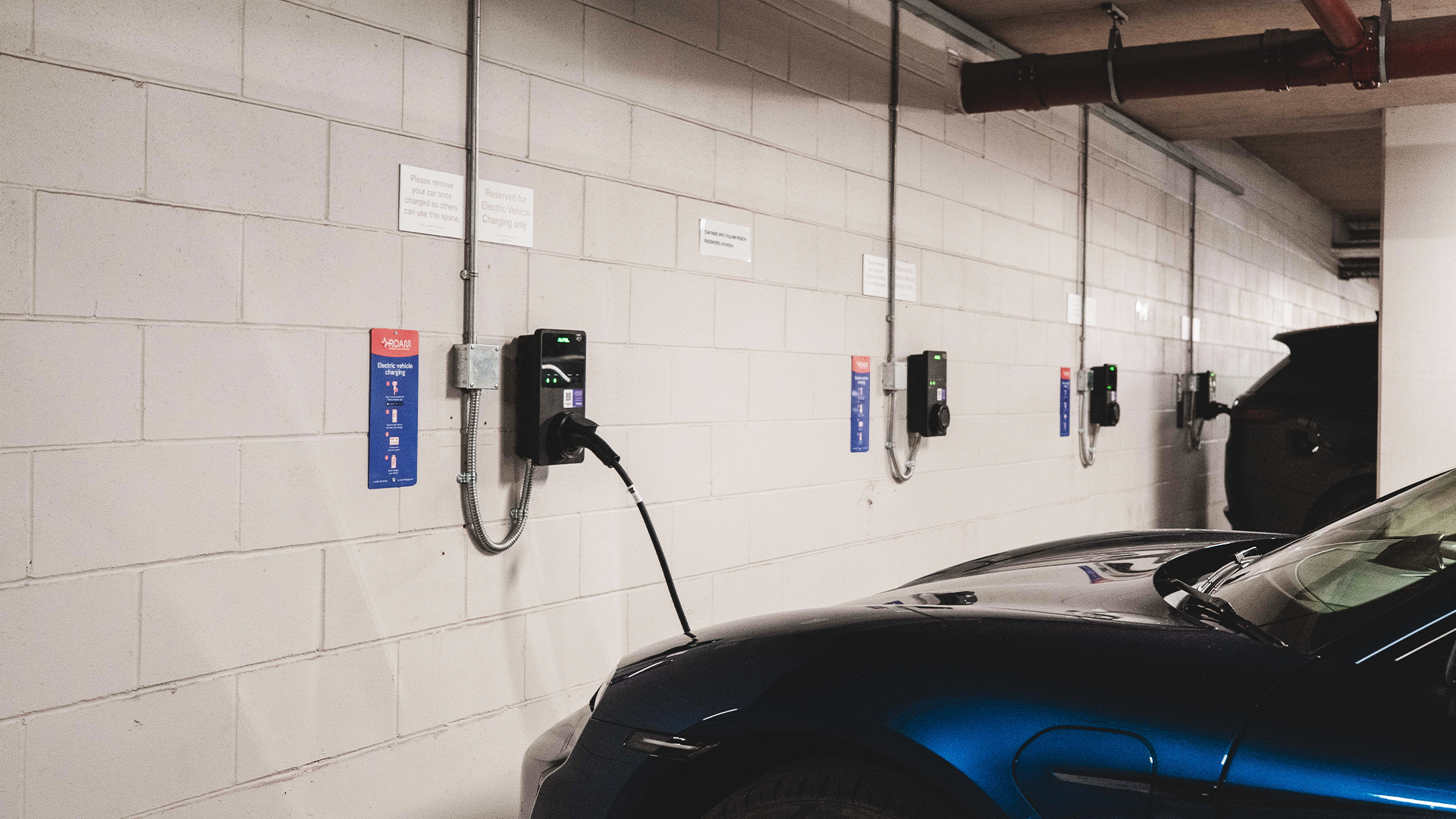
Under Roam’s fully funded model, Roam pays for the agreed charging infrastructure and live chargers at the development.
Roam also controls and operates the charging service. This includes setting a competitive resident tariff and managing the network once it is live.
The development does not need to fund the initial installation. Depending on the commercial agreement and suitability of the site, there may also be an opportunity for the client to receive a fixed rent or a share of the charging profit.
Because Roam is making a significant upfront investment, a fully funded installation is delivered through a long-term agreement. The exact commercial terms vary by development and are explained during the assessment process.
What does Roam fund?
For an approved fully funded apartment-block project, Roam funds both:
The agreed electrical infrastructure required for the charging network.
- The live EV chargers included in the initial installation.
- The precise design will depend on the site.
Some developments may need shared charging bays that different residents can use. Others may have allocated or demised parking spaces. A larger development might benefit from infrastructure that can support more chargers as resident demand increases.
That is why the process starts with an assessment rather than a fixed package.
Roam looks at the development, its parking and existing EV demand before proposing the most suitable approach.
Is fully funded EV charging really free for the development?
With Roam’s fully funded model, the development does not pay the upfront cost of the agreed infrastructure or live chargers.
However, it is still a commercial agreement.
The development provides suitable parking space and access for the charging network, while Roam needs enough time and expected usage to recover its investment. The agreement therefore includes long-term commitments and site-specific commercial terms.
Property managers should always ask a provider to explain:
- Exactly which installation costs are funded.
- How many chargers are included initially.
- Whether future chargers are also funded.
- Who controls the equipment and tariff.
- How long the agreement lasts.
- Whether parking spaces need to be dedicated to charging.
- What happens if the development or car park changes ownership.
Fully funded charging can remove the upfront financial barrier, but the complete arrangement should still be understood before an agreement is signed.
Which apartment blocks are suitable for fully funded EV charging?
Not every apartment block will be suitable for a fully funded installation.
Roam assesses each development individually. Two of the most important considerations are:
- The size of the apartment block.
- The number of existing or expected EVs on site.
A larger development with clear resident demand is more likely to generate the regular charging use needed to support the investment.
That does not mean every parking bay needs a charger from day one.
The right solution may begin with a smaller number of live chargers, designed around current demand, with a plan for the network to grow over time.
If a development is not suitable for fully funded charging, a client-funded residential solution may provide another route.

Who controls and owns the charging equipment?
Under Roam’s fully funded model, Roam funds and controls the charging infrastructure and live chargers throughout the agreement.
That allows Roam to operate the network as a complete service, rather than leaving the property team responsible for separate hardware, software and maintenance suppliers.
Under a client-funded model, the position is different. The development pays for and owns the charging infrastructure and chargers.
This distinction is important when comparing providers. Property teams should be clear about who controls the equipment, who makes operational decisions and what happens at the end of the agreement.
Who sets the resident charging tariff?
Roam controls the tariff on a fully funded site and offers residents a competitive charging rate.
This allows the cost of the service, electricity and ongoing management to be considered together. Residents can see the applicable tariff when charging and pay for the electricity used during their session.
On a client-funded model, the development controls the tariff. This gives the client greater flexibility over the price residents pay and how charging revenue is used.
Whichever model is chosen, tariffs should be clear and easy for residents to understand.
How do residents pay for charging?
Residents pay for the energy used during their individual charging session.
The charging platform records each session, so the property team does not need to read individual meters, calculate usage or add charging costs manually to service charge accounts.
This creates a clearer experience for everyone.
Residents pay for their own charging, while the managing agent can access charging data without taking on the day-to-day billing administration.
Before selecting any provider, it is worth checking:
- How residents start and pay for a session.
- Whether the tariff is visible before charging begins.
- Who handles payment queries.
- How refunds or failed sessions are managed.
- How charging income is reported.
Can the development earn revenue from the chargers?
There may be an opportunity for the development to receive a fixed rent or a share of charging profit under Roam’s fully funded model.
This will depend on the site and the commercial agreement. It should not be assumed that every development will receive the same arrangement.
With a client-funded model, the development sets the tariff and receives the charging revenue. The client also takes responsibility for the initial investment and pays a monthly management charge for the ongoing service.
The right option depends on what matters most to the development: removing upfront cost, retaining control, generating revenue or balancing all three.
What ongoing services are included?
Installing the chargers is only the beginning.
Under Roam’s fully funded model, the ongoing service includes:
- Charger and network management.
- Remote monitoring.
- Maintenance.
- Charging software.
- Resident billing.
- Reporting.
- 24/7 driver support.
This means residents have somewhere to turn when they need help, while the property team is not expected to manage the technical service itself.
On a client-funded model, these services are covered through a monthly management charge. The development owns the infrastructure, while Roam provides the management needed to keep the charging network operating effectively.
When comparing proposals, check whether ongoing costs are included or charged separately. A low installation price can look less attractive if software, maintenance and support are added later.
Can government grants be used with fully funded charging?
Government grant funding cannot be claimed alongside Roam’s fully funded model.
Where a development chooses a client-funded solution, eligible residential landlords may be able to apply for the Government’s Electric Vehicle Chargepoint Grant for residential landlords.
As of September 2026, the grant covers 75% of eligible purchase and installation costs, up to £500 per socket and up to 200 sockets per year. It applies to certain existing residential properties and is subject to the Government’s eligibility requirements.
The former Residential Landlord Infrastructure Grant closed to new applications on 31 March 2026.
Housing associations and registered social housing providers can read our dedicated guide to EV charging for housing associations.
Grant schemes can change, so check the latest GOV.UK guidance before building funding into a project.
Fully funded or client funded: which is right for your development?
Both models can deliver a fully managed residential charging network. The main difference is who makes the initial investment and who retains commercial control.
A fully funded model may suit developments that want to introduce charging without using capital or adding operational responsibility.
A client-funded model may suit developments that want to own the infrastructure, set the tariff and retain the charging revenue.
In some client-funded schemes, the main infrastructure can be installed first and individual residents can request and pay for a charger when they need one. This can help the charging network grow in line with genuine demand.
Questions to ask about a fully funded proposal
Before agreeing to a fully funded EV charging installation, ask:
- What infrastructure and equipment will the provider fund?
- How many live chargers will be installed initially?
- What resident demand does the proposal assume?
- Who controls the chargers and charging tariff?
- What does the development need to provide?
- Are any installation or connection costs excluded?
- What ongoing services are included?
- Who handles resident billing and support?
- Is fixed rent or profit share available?
- How can the network expand as demand grows?
- What are the long-term commitments?
- What happens if the property is sold or its management changes?
Clear answers make it easier to compare a funded proposal with buying the infrastructure directly.
How does the Roam process work?
The first step is understanding the development.
Roam reviews the size of the site and the number of existing or expected EVs to assess whether a fully funded model may be suitable.
If the site progresses, the proposed solution is shaped around its parking arrangements, resident demand and operational requirements. Roam then explains the commercial model, responsibilities and long-term agreement before anything moves forward.
Once agreed, Roam manages the installation and operates the charging network, including the tariff, maintenance, software, billing and 24/7 driver support.
It is a complete service designed to make residential charging easier for both residents and the people managing the development.
Bringing charging closer to home
For apartment blocks, the cost and complexity of EV charging can make it difficult to know where to begin.
A fully funded solution can remove the upfront investment and ongoing operational burden. A client-funded solution can give the development greater ownership and commercial control.
The important thing is choosing the model that fits the site.
Not just today, but as more residents make the switch to electric.
Roam has delivered fully funded residential charging at developments including Royal Wharf and Fulham Reach.
For a wider look at selecting a provider, read our guide to choosing an EV charging provider for an apartment block.
To find out whether your development could be suitable for fully funded EV charging, speak to Roam’s residential team.
Under the fully funded option, Roam covers the full cost of installation and maintenance. In return, your business provides the space and access for the chargers, while benefiting from an EV charging solution at no upfront cost.
We offer a range of fast and rapid chargers, tailored to suit your site’s needs and expected usage patterns. Our team will recommend the best option based on your business type.
Installation time depends on the size and complexity of the project, but most installations are completed within a few days. We aim to minimize downtime and disruption to your business.