How to choose an EV charging provider for an apartment block
A guide for property managers, managing agents and housing providers.

How to choose an EV charging provider for an apartment block.
Last updated: 28 September 2026
Choosing an EV charging provider for an apartment block means looking beyond the chargers themselves. The right provider should understand communal and allocated parking, assess the site’s electrical capacity, offer a suitable funding model, manage resident billing and provide reliable support once the chargers are live.
Because installing the hardware is only one part of the job.
For a residential development, the real challenge is creating a charging setup that works for the building, the people managing it and the residents using it every day.
What is the best EV charging solution for a block of flats?
The best EV charging solution for a block of flats is usually a managed, site-wide charging network designed around the development’s parking arrangements, electrical capacity and resident demand. It may use shared chargers, chargers in allocated bays or a mixture of both.
The infrastructure should support individual resident billing, balance the available electrical supply and allow more chargers to be added as demand grows. Depending on the development, the solution may be client-funded or delivered through a fully funded, zero-upfront-cost model.
What should you look for in an apartment block EV charging provider?
The best EV charging provider for an apartment block will be able to:
- Design a solution around the development’s parking layout and electrical capacity.
- Support shared, allocated or demised parking bays.
- Recommend the right number and type of chargers for current demand.
- Prepare the site so more chargers can be added later.
- Explain the available funding and ownership options clearly.
- Manage resident payments without adding work for the property team.
- Monitor, maintain and support the chargers after installation.
Every apartment block is different. A provider should understand those differences before recommending a solution.
1. Look for experience in residential EV charging
Charging at an apartment block is not the same as installing a charger on a private driveway.
There may be hundreds of residents, several parking areas, limited electrical capacity and different arrangements for who owns or uses each bay. Property managers may also need to balance resident demand with budgets, permissions, fire safety, disruption and the long-term plans for the development.
That calls for more than an off-the-shelf charger.
Look for a provider with proven experience across apartment blocks, multi-dwelling developments and communal car parks. Ask to see residential case studies that explain the challenge, the solution and how the charging network is managed today.
For example, at Beaufort Park in North West London, Roam worked with RMG London to deliver 56 live 22kW charging sockets, with the infrastructure prepared for a further 61 sockets as demand grows.
That phased approach gave residents access to charging without installing every charger at once.
Housing associations should also consider how a provider will support multiple developments, resident billing and phased portfolio rollouts. Read our guide to EV charging for housing associations.
2. Make sure the process starts with the site
Before talking about charger numbers, a provider should take time to understand the development.
That means looking at:
- The number and location of parking bays.
- Whether bays are shared, allocated or demised.
- Current resident demand.
- The available electrical supply.
- Cable routes and the distance from the power source.
- Mobile or Wi-Fi connectivity within the car park.
- Access, lighting, signage and bay management.
- How future chargers could be added with minimal disruption.
Basement and multi-storey car parks can bring their own complications. Long cable routes, thick concrete walls and limited connectivity can all affect the design.
A detailed site assessment helps uncover those challenges early. It also allows the provider to recommend a solution based on evidence, rather than simply choosing an arbitrary number of chargers.
3. Choose an approach that fits the parking layout
There is no single model that works for every apartment block.
Shared parking bays
In developments with communal parking, dedicated EV charging bays can be made available for different residents to use.
This can be a practical way to meet early demand without installing a charger for every home. The provider should consider how residents access the chargers and how they will be kept available for charging.
New Capital Quay in Greenwich uses a shared model, with residential charging bays available on a first come, first served basis.
Allocated or demised bays
Other developments have spaces assigned to individual homes. In this case, residents may want a charger installed in their own bay.
The important part is creating a coordinated route for those installations. Allowing residents to arrange completely separate chargers can lead to duplicated work, inconsistent equipment and unmanaged pressure on the building’s electrical supply.
A site-wide plan gives residents a clear pathway to request a charger while keeping the infrastructure controlled for the whole development.
A mixture of both
Some sites benefit from a combination of shared and allocated charging.
The right provider should be comfortable with all three approaches and explain which one suits the way your car park is used.
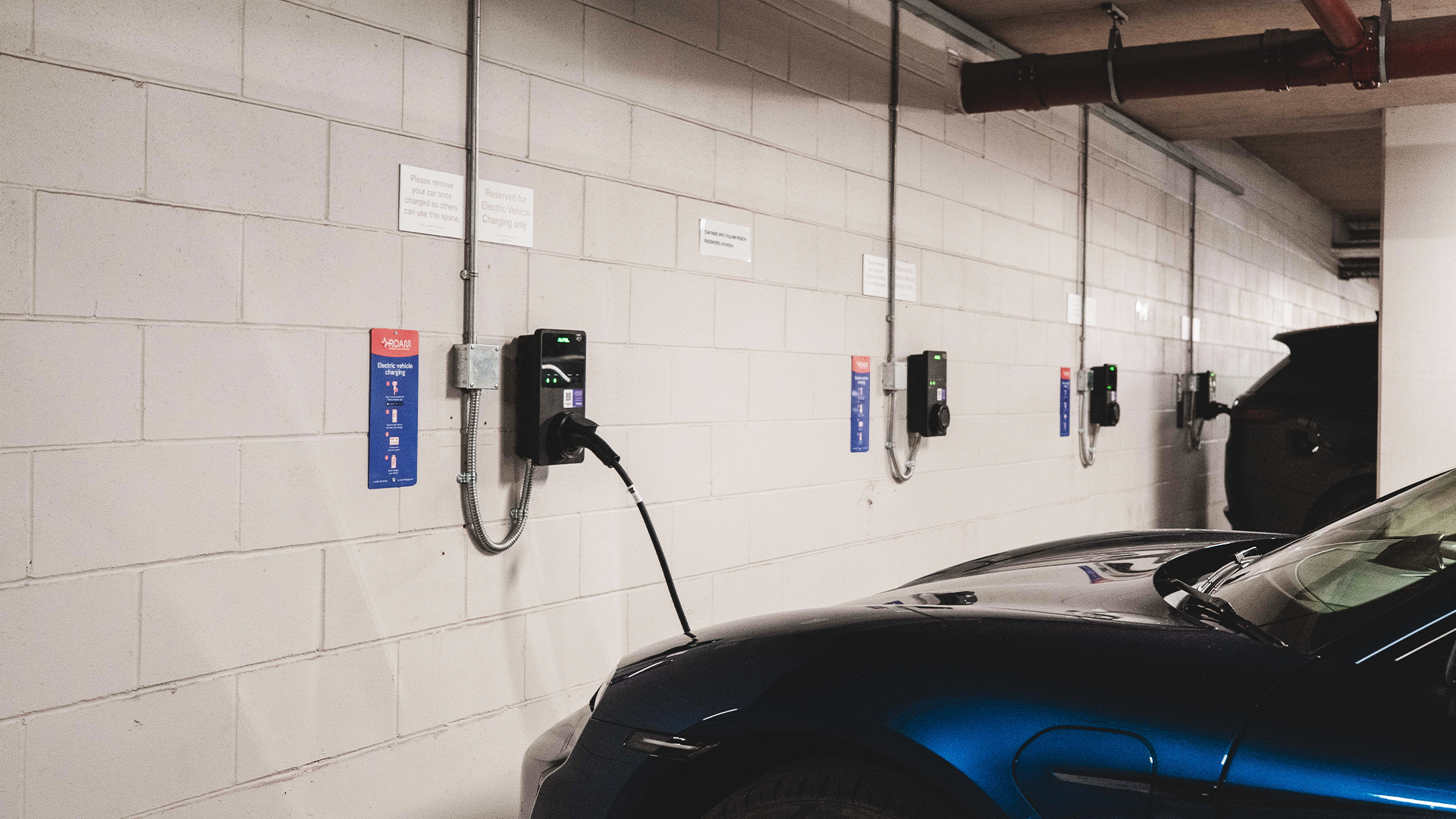
4. Ask how electrical capacity will be managed
One of the first questions property teams ask is whether the building has enough power.
It is an important question. But a limited supply does not automatically mean EV charging is off the table.
A provider should assess the available capacity and explain whether load management could help. Load management controls how power is distributed between vehicles, reducing demand at busy times and making better use of the electricity already available.
The design should also account for future demand.
That might mean installing passive infrastructure, such as cabling routes and connection points, alongside the first live chargers. More sockets can then be activated later without repeating the most disruptive parts of the installation.
Ask the provider:
- How has the available capacity been calculated?
- Is a new electrical connection required?
- Will the system balance power between chargers?
- What happens as more residents switch to EVs?
- How easily can the charging network be expanded?
The goal is not necessarily to install the maximum number of chargers on day one. It is to make sure the development has a sensible route from the demand it has now to the demand it may have later.
5. Compare funding and ownership options clearly
Fully funded EV charging
With a fully funded solution, the provider funds the agreed installation and typically manages the charging network for an agreed period. This can remove the need for upfront capital investment from the property owner or managing agent.
Not every development will qualify. Suitability will depend on factors such as location, expected usage, parking arrangements, available power and the wider commercial assessment.
Client-funded EV charging
With a client-funded solution, the development pays for the infrastructure and chargers. This can offer greater ownership and flexibility over how the service is set up.
The provider should still manage monitoring, payments, maintenance and driver support on the client’s behalf.
Government grants
Eligible residential landlords can currently apply for support towards buying and installing chargepoints at residential properties they own or manage.
As of September 2026, the electric vehicle chargepoint grant for residential landlords covers 75% of eligible purchase and installation costs, up to £500 per socket and up to 200 sockets per year. The scheme is due to remain available until 31 March 2027, although government funding and eligibility rules can change.
The former residential landlord infrastructure grant closed to new applications on 31 March 2026. Always check the latest GOV.UK guidance before planning around grant funding.
A good provider should explain the complete commercial picture, including installation, electricity, maintenance, software and any ongoing charges. That makes it easier to compare like with like.
6. How does resident billing work for apartment block EV charging?
Each resident’s charging usage is recorded individually through the charging platform. The operator can then bill residents directly, meaning electricity costs do not need to be calculated manually or added to the general service charge.
With Roam’s fully funded model, Roam manages resident billing and controls the charging tariff while offering residents a competitive rate. With a client-funded model, the development owns the infrastructure, sets the resident tariff and receives the charging revenue.
Ask potential providers:
- How does a resident start and pay for a charge?
- Can drivers see the tariff before the session begins?
- Is energy use recorded for each individual session?
- What charging data can the property team access?
- How is revenue collected, reported and transferred?
- Who handles payment or charging queries from residents?
Clear billing protects the property team from unnecessary administration and gives residents confidence that they are paying for their own usage.
7. Check what happens after installation
An EV charging network is a long-term service.
Once it is live, chargers need to be monitored, maintained and kept easy to use. Residents also need somewhere to turn if they have trouble starting a session or making a payment.
Before choosing a provider, confirm who is responsible for:
- Remote charger monitoring.
- Planned and reactive maintenance.
- Software and connectivity.
- Driver support.
- Fault reporting and response.
- Tariff updates.
- Usage and revenue reporting.
- Adding more chargers as demand grows.
Without a clear management plan, those responsibilities can quietly fall back on the property team.
The right provider should reduce that workload, not create another one.
Questions to ask an EV charging provider
Before making a decision, ask every provider the same questions:
- What experience do you have with apartment blocks and communal car parks?
- Can you show us comparable residential projects?
- How will you assess our electrical capacity and parking arrangements?
- Do you support shared, allocated and demised bays?
- How many chargers should be live initially, and why?
- How will the site be prepared for future demand?
- What funding and ownership models are available?
- What is included in the quoted cost?
- How will residents pay for their charging?
- What information will the property team be able to see?
- Who monitors and maintains the chargers?
- Is driver support available outside normal office hours?
- What happens if a charger or its connection develops a fault?
- How will residents be kept informed before and during installation?
- What commitments, contract terms or space requirements apply?
Clear answers at this stage make it much easier to compare providers and avoid surprises later.
Why property managers choose Roam
Roam works with property managers, managing agents, freeholders and housing providers to make residential EV charging easier to plan and manage.
Every project begins with the development itself. We look at its parking, power, resident demand and long-term requirements before recommending an approach.
Our residential experience includes:
- Beaufort Park: 56 active 22kW sockets and infrastructure for a further 61.
- Battersea Power Station: 98 charging bays for residents near the landmark development.
- Wimbledon Stadia: 49 EV charging bays at Wimbledon Grounds.
- New Capital Quay: shared residential and visitor charging at a mixed-use development in Greenwich.
Depending on the site, Roam can offer fully funded or client-funded EV charging. We can support the process from consultation and design through to installation, resident payments, ongoing monitoring, maintenance and driver support.
Because good residential charging should feel simple for everyone involved.
Bringing it all together
The best EV charging provider for your apartment block is not necessarily the one offering the most chargers or the quickest installation.
It is the provider that understands how the development works.
One that can plan around the parking layout, use the available power intelligently, give residents a simple way to charge and support the network for years to come.
Take time to compare the full service, not just the hardware.
That is how an apartment block moves from answering individual requests to building a charging solution that works for the whole community.
To explore what EV charging could look like at your development, speak to Roam about residential EV charging.
Yes, there are various government grants and incentives available to support businesses installing EV chargers. Roam can help you identify and apply for relevant funding opportunities. Contact us to discuss your options.
Yes, the Roam app tracks the cost of your charging session in real-time so you can see exactly how much you’re spending.
We offer fully funded and client-funded models. With fully funded, Roam covers the cost of installation and maintenance, while client-funded allows you to purchase the infrastructure outright.