Exploring the Different Charger Types for Electric Vehicles
Owning an electric vehicle (EV) is a step towards a greener, cleaner future. However, navigating the world of EV chargers can be a bit tricky - especially with so many different types. From Type 2 to CCS and CHAdeMO, understanding which charger suits your needs is crucial for a smooth charging experience.

Project overview
This guide breaks down the most common charger types, their features, and how they fit into the UK’s expanding EV infrastructure. Whether you’re a driver, business owner, or property manager, this is your go-to resource for making informed charging decisions.
- Understanding charger types
- The most common charger types in the UK
- How to choose the right Charger for your EV
- Key differences between charger types
- Benefits of understanding different charger types
- Future developments in EV charger technology
Understanding Charger Types
What Are EV Charger Types?
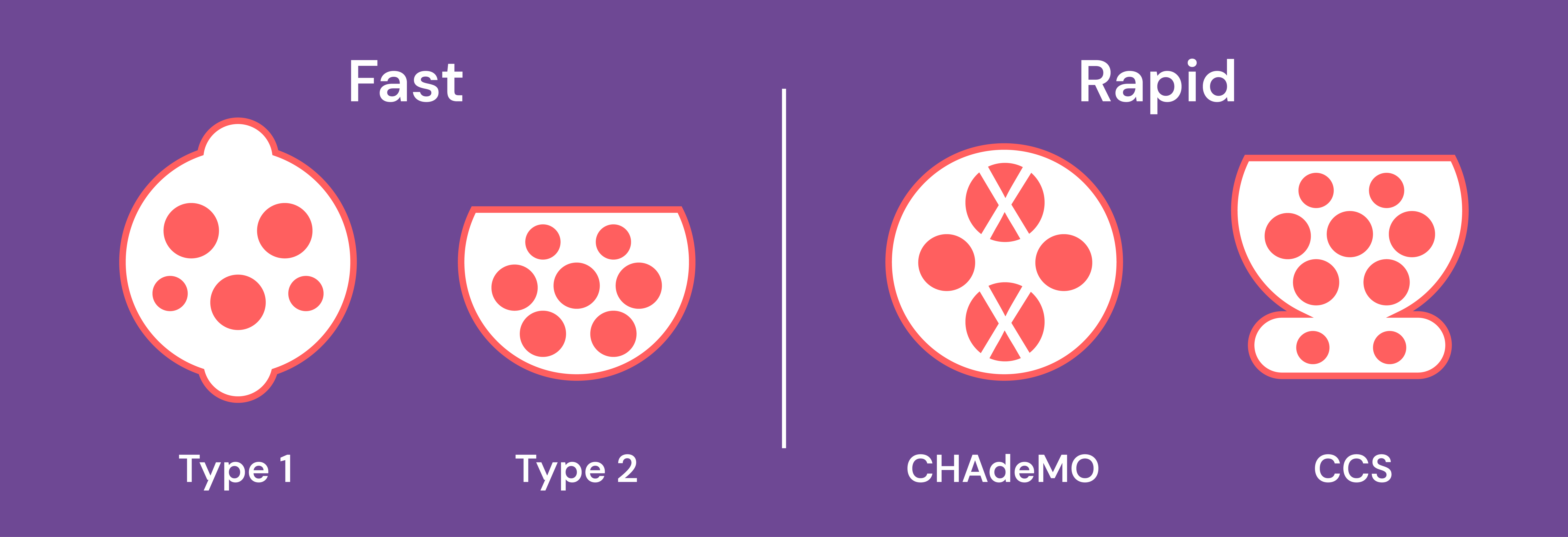
When you plug your EV into a charging point, the connector—the physical piece of equipment transferring energy to your car—is referred to as the charger type. These vary by manufacturer, car model, and the type of electricity they deliver (AC or DC).
In the UK, there are four key types of chargers in use:
- Type 2: The most common connector for home and public charging points.
- CCS (Combined Charging System): A rapid and versatile option for long journeys.
- CHAdeMO: A trusted rapid-charging standard for certain Japanese EVs.
- Type 1: Now rare, but still found in older EVs, especially those imported from the US or Japan.
Understanding these chargers and their applications can make your charging experience seamless - whether you're charging at home, at work, or on the go.
The Most Common Charger Types in the UK
1. Type 2
The UK Standard
Type 2 is the go-to connector for most EVs in the UK and Europe. Designed for versatility, this charger type supports both slow and fast AC charging, making it ideal for a variety of settings.
- Power Output: 3.7kW to 22kW, depending on the charging station.
- Best For: Home chargers, workplace charging, and public fast-charging points.
- Compatible Vehicles: Most modern EVs, including Tesla (with adapter), BMW i3, Renault Zoe, and Hyundai Kona.
Why It’s Popular:
Type 2’s universal design and three-phase capability allow for faster charging than older connectors like Type 1. It’s also widely available, with nearly every UK public charging station offering Type 2 connectors.
2. CCS (Combined Charging System)
Fast and Flexible
The CCS connector builds on the Type 2 design, adding two extra pins to enable rapid DC charging. It’s become the dominant rapid-charging standard in the UK and Europe, favoured for its speed and efficiency.
- Power Output: 50kW to 350kW, depending on the charger.
- Best For: Rapid charging at motorway service stations and urban hubs.
- Compatible Vehicles: Volkswagen ID. series, Jaguar I-PACE, Hyundai Ioniq, and most new EV models.
Why It’s Popular:
CCS offers the best of both worlds: the convenience of Type 2 for AC charging and the speed of rapid DC charging when time is tight. This versatility makes it a favourite for EV drivers on long journeys.
3. CHAdeMO
Rapid Charging for Japanese Models
CHAdeMO is a rapid-charging standard originally developed in Japan. While its usage is declining in the UK, it remains a key option for certain older and Japanese-made EVs.
- Power Output: Up to 50kW (DC).
- Best For: Rapid charging at specific public stations, such as motorway services.
- Compatible Vehicles: Nissan Leaf (pre-2018), Mitsubishi Outlander PHEV, and Kia Soul EV.
Why It’s Popular: CHAdeMO’s stable performance has made it a trusted option for many EV owners. CCS becomes more widespread, CHAdeMO is gradually being phased out in favour of faster, more universally compatible solutions.
4. Type 1
An Older Standard
Once popular in the US and Japan, Type 1 chargers are now rare in the UK. These connectors only support single-phase AC charging, making them slower and less efficient compared to Type 2.
- Power Output: Up to 7.4kW (AC).
- Best For: Home charging for older EV models.
- Compatible Vehicles: Older Nissan Leaf and Mitsubishi Outlander PHEV models.
Why It’s Less Common:
Type 1 chargers lack the three-phase capability of Type 2, which limits their speed. As EV technology advances, Type 1 is becoming obsolete.
How to Choose the Right Charger for Your EV
Choosing the right charger type depends on your lifestyle and vehicle. Here are some factors to consider:
- Your Vehicle's Compatibility:
Check your car manual or manufacturer’s website to confirm which connector types your EV supports. Most UK models are equipped with Type 2 and CCS connectors. - Your Charging Habits:
- For regular home charging, a Type 2 connector is ideal.
- For long trips, look for rapid charging options like CCS or CHAdeMO.
- Charging Speed:
If you frequently need quick top-ups, a rapid charger like CCS is essential. For overnight charging, slower options will suffice.
Key Differences Between Charger Types
Here’s a closer look at how the common charger types stack up:
Benefits of Understanding Different Charger Types
Being familiar with the different charger types means you’ll:
- Save Time: Know exactly where to charge your EV without any confusion.
- Plan Better: Choose chargers that fit your schedule, whether it’s a quick top-up or an overnight session.
- Optimise Costs: Slow and fast chargers are often cheaper to use than rapid ones, so understanding your options can save you money.
For businesses, offering multiple charger types ensures accessibility for all EV drivers, enhancing customer satisfaction and loyalty.
Future Developments in EV Charger Technology
The UK’s EV infrastructure is rapidly evolving, with exciting innovations on the horizon:
- Ultra-Rapid Charging: Stations offering speeds of 150kW and above are becoming more common, drastically reducing charging times.
- Wireless Charging: Trials for cable-free, pad-based charging are already underway.
- Standardisation: The push for a unified standard means newer EVs are likely to support CCS as the primary rapid-charging option.
With these developments, the UK is poised to make EV ownership even more convenient in the years to come.